

The short answer
Your health insurance may still protect you when you travel to another state, but routine out-of-state care is not automatically covered just because you have health insurance. What you can use away from home depends on your exact provider network and plan benefits.
For Marketplace plans, HealthCare.gov confirms an important exception: emergency services have special federal protections even when the hospital is outside your plan's network. But that is very different from having a nationwide in-network PPO network for routine care.
So the better question is not simply, “Does my health insurance work in another state?” It is: Does my exact plan give me usable in-network access outside my home area when the care is not an emergency?
Marketplace PPO does not automatically mean nationwide PPO
This distinction matters because the letters PPO describe how a plan handles network and out-of-network care. They do not tell you how geographically large the network is.
HealthCare.gov explains that Marketplace plans operate within defined service areas, and Marketplace coverage is tied to where you live. If you permanently move to another state, HealthCare.gov instructs you to start a new Marketplace application in the new state rather than simply carrying the old Marketplace plan with you as your permanent local coverage.
HealthCare.gov also defines a PPO as a plan where you generally pay less in network but can use out-of-network providers for an additional cost. That still does not mean every Marketplace PPO gives you a nationwide in-network provider network.
Marketplace PPO and nationwide PPO are not interchangeable terms.
What happens if you have an emergency while traveling?
This is where federal protections matter.
HealthCare.gov states that in a true emergency, you should go to the closest hospital that can help you. Your insurer cannot require prior approval before you receive emergency room services from an out-of-network provider or hospital.
HealthCare.gov also states that a plan cannot charge higher copayments or coinsurance simply because emergency room services were received at an out-of-network hospital.
That does not necessarily mean emergency care is free. Your deductible and other applicable cost sharing may still apply.
Emergency protection is not nationwide routine coverage
This is one of the easiest insurance concepts to misunderstand.
An HMO or EPO can protect you during an out-of-state emergency while still providing little or no coverage for voluntary non-emergency care outside its network. A PPO may provide out-of-network benefits for an additional cost, but that does not automatically turn every out-of-state provider into an in-network provider.
Emergency protection answers the question, “What happens if something serious happens while I am away?” A nationwide PPO network answers a different question: “Can I routinely use participating providers across the country at in-network rates?”
How HMO, EPO, PPO, and POS networks can affect travel
HealthCare.gov describes the major network structures this way:
HMO: Generally limits coverage to HMO providers and generally does not cover out-of-network care except in an emergency.
EPO: Generally covers services only through providers in the plan's network, except in an emergency.
PPO: Generally costs less in network but allows you to use providers outside the network for an additional cost.
POS: Generally costs less when you use network providers and requires a referral from your primary care doctor to see a specialist. The specific plan documents should be checked for its out-of-network rules.
The network acronym tells you the structure. It does not, by itself, tell you whether the network is statewide, regional, multistate, or nationwide.
What if you actually need a nationwide PPO?
For someone who travels frequently, works in multiple states, splits time between homes, has children living elsewhere, or simply wants broad provider access, a true nationwide PPO network can be much more useful than a plan designed primarily around a local service area.
ValleyView Health Co works with private-market health options that can offer access to nationwide PPO networks for eligible applicants. These options are separate from the state Marketplace and should be evaluated carefully because eligibility, underwriting, benefits, exclusions, and ACA status can vary by product.
Other common ways people may have access to broad or nationwide PPO networks include employer-sponsored group health insurance and certain direct-to-carrier plans. Those routes can be excellent coverage, but cost and availability vary substantially.
That is why someone who specifically needs nationwide PPO access should compare the actual network and benefits rather than assuming the Marketplace is the only place to shop.
Private health insurance vs. Marketplace coverage for travelers
The Marketplace can be an excellent fit, especially for someone who qualifies for premium tax credits or needs ACA-compliant coverage with guaranteed issue and pre-existing-condition protections.
But someone whose main priority is nationwide provider access may have a different set of needs. ValleyView can compare the Marketplace against private-market options rather than forcing every shopper into one category.
The goal is not to declare private coverage better than Marketplace coverage. The goal is to identify which type of coverage actually matches the person's medical needs, budget, eligibility, provider preferences, and travel habits.
What if you split your time between two states?
If you regularly live, work, attend school, visit family, or spend extended periods in another state, provider access away from your primary residence deserves special attention.
Before enrolling, check whether the exact plan has participating doctors, hospitals, urgent care centers, laboratories, pharmacies, and specialists in the areas where you realistically expect to need non-emergency care.
A plan can work beautifully at home and become inconvenient once routine care is needed hundreds or thousands of miles away.
Does a PPO mean your doctor is automatically in network?
No. Even a nationwide PPO does not mean every doctor in America participates.
The correct question is:
“Is this provider in network with this exact PPO network?”
A doctor's office may accept one product from an insurance company while being out of network with another product carrying the same company's name. Always verify the exact network rather than relying solely on the logo printed on the insurance card.
What about prescriptions while traveling?
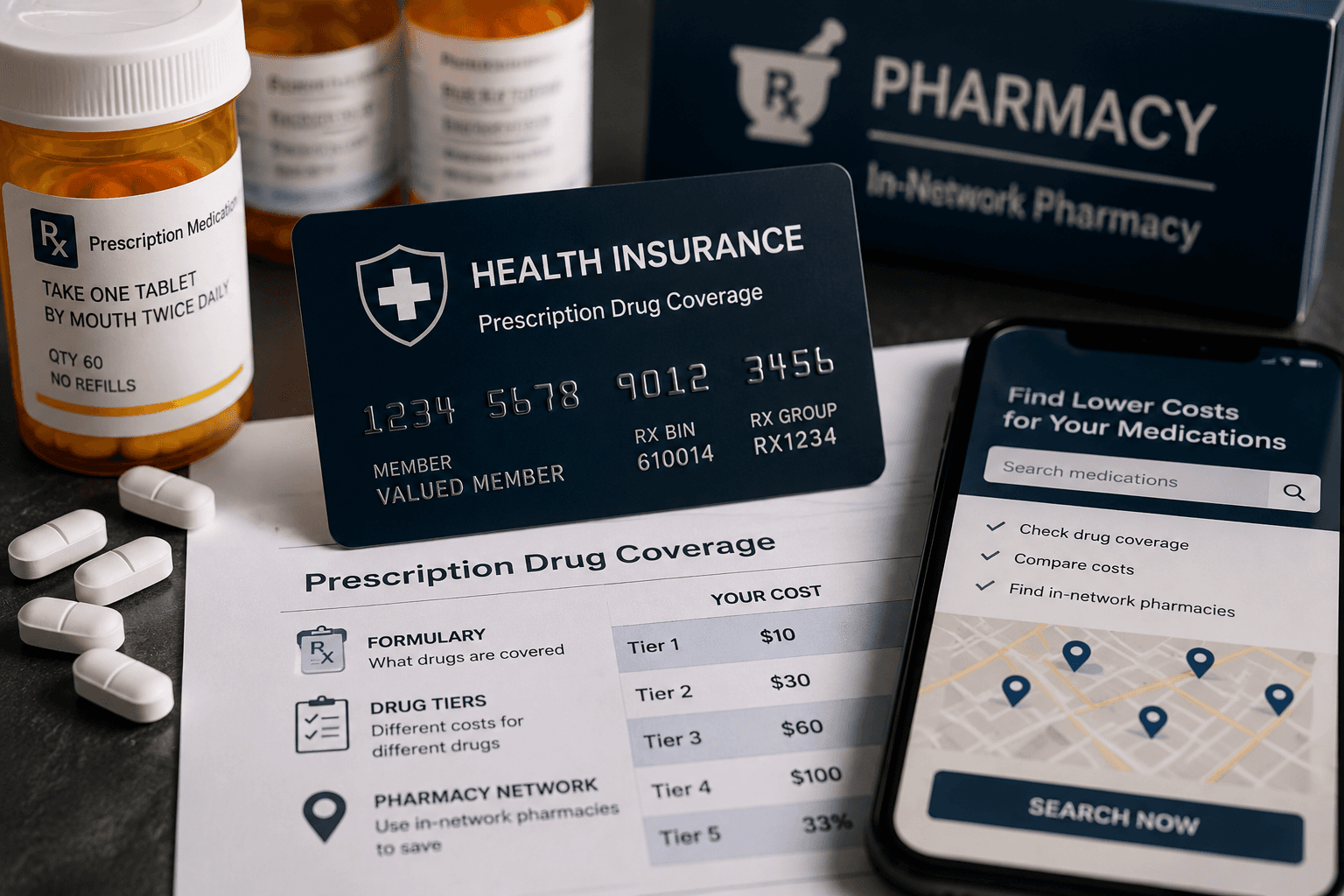
Prescription coverage can have a separate pharmacy network from the medical provider network.
Before traveling, check which pharmacies participate in your prescription drug benefits and whether there are any restrictions on refills away from home. If you take regular medications, understanding those rules before leaving can prevent unnecessary problems.
A national pharmacy brand does not automatically guarantee that every location will be treated as in network under every prescription plan.
What about health insurance outside the United States?
Domestic health insurance and international medical coverage are different products.
HealthCare.gov explains Marketplace coverage in the context of health care received within the United States. If you are traveling internationally, do not assume your domestic plan will function like travel medical insurance overseas.
Depending on the trip and your existing coverage, separate travel insurance or travel medical coverage may be worth considering.
What should frequent travelers check before enrolling?
Exact network name. Do not stop at the insurance company name or the word PPO.
Geographic reach. Ask whether the network has participating providers where you actually travel.
Routine out-of-state care. Determine whether it is in network, out of network, or not covered.
Emergency benefits. Understand the protections that apply when a true emergency occurs away from home.
Pharmacy network. Confirm prescription access in the areas you visit.
ACA status and exclusions. If considering private-market coverage, understand exactly what type of plan you are evaluating and what it does and does not cover.
The question to ask if you want nationwide health insurance
Instead of asking only, “Is this a PPO?” ask:
“Does this exact plan give me nationwide in-network PPO access, and are the providers I care about actually participating?”
That question separates the network's structure from its geographic reach.
Choose coverage around how you actually live
Health insurance should fit more than your ZIP code on enrollment day. Your doctors, prescriptions, budget, travel habits, health history, eligibility, and need for provider flexibility all matter.
At ValleyView Health Co, we compare both Marketplace and private-market health coverage when appropriate. For eligible applicants who need broader access, we can also look at private options offering nationwide PPO networks rather than assuming a local Marketplace network is the only choice.
If you want help comparing coverage based on where you live and travel, request a quote or call or text (406) 855-9636. You work directly with Josef Doney from the first question forward, and your information is never sold, rented, or traded.
This article explains general insurance concepts and is not individualized financial, tax, medical, or legal advice. Coverage, eligibility, underwriting, networks, ACA status, and plan terms vary. Always confirm benefits, exclusions, provider participation, and out-of-network rules in the specific plan documents before enrolling or receiving care.

Licensed health insurance agent and Agency Principal at ValleyView Health Co. Questions about anything in this article? Ask him directly — no pressure, ever.