

The short answer
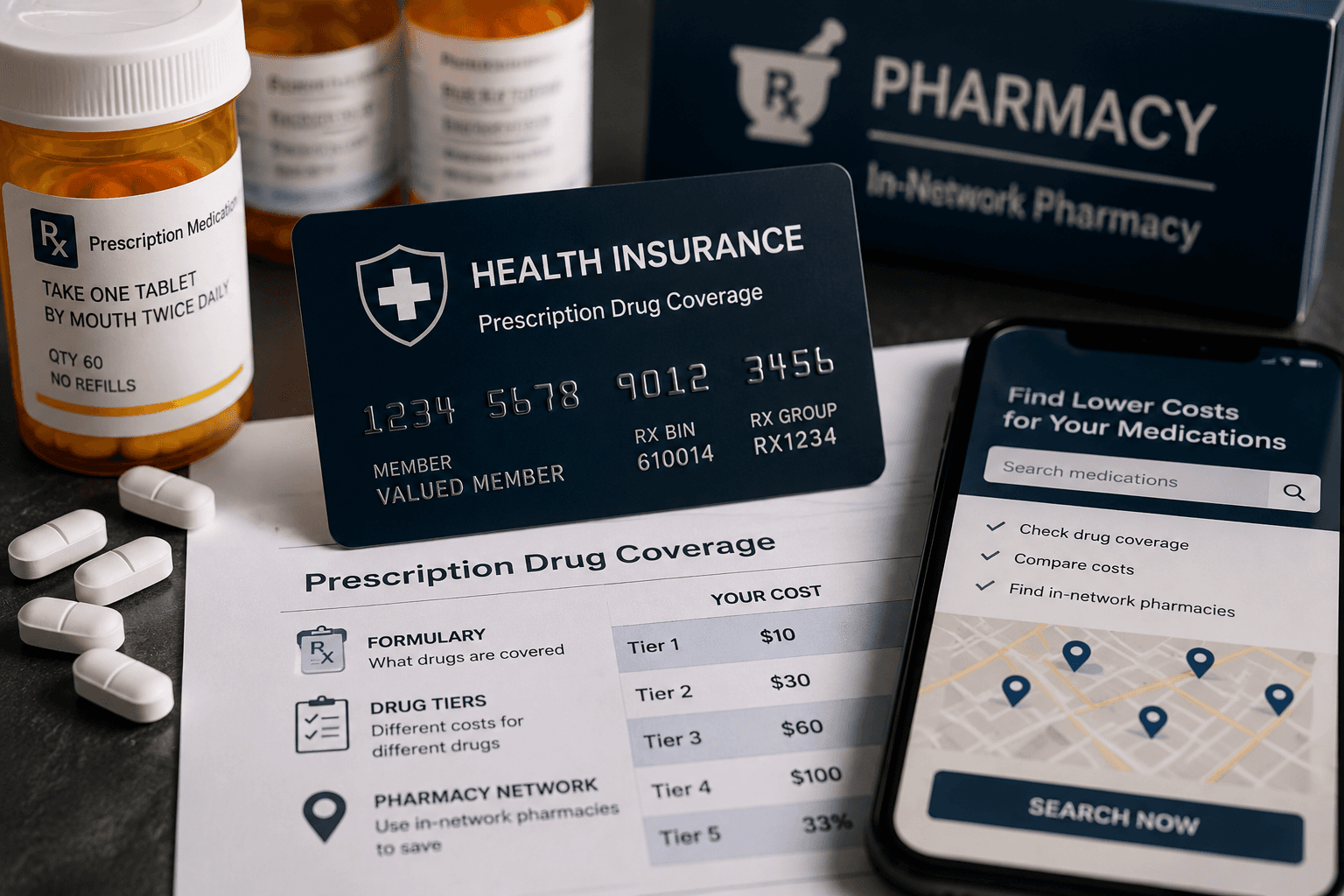
A health insurance plan can include prescription drug coverage and still not cover the specific medication you take. The key is the plan's formulary, also called its drug list.
HealthCare.gov defines a formulary as the list of prescription drugs covered by a health insurance or prescription drug plan. Marketplace plans include prescription drugs as an essential health benefit, but the specific medications covered and what you pay can differ from one plan to another.
That is why checking only the monthly premium, deductible, or insurance company is not enough if you take medication regularly.
What is a health insurance formulary?
A formulary is the list of medications your health plan covers. Two plans from the same insurance company can have different drug lists, different costs, and different rules for the same prescription.
Before enrolling, search the exact medication name in the plan's covered-drug list. HealthCare.gov also recommends reviewing the plan's Summary of Benefits and Coverage, insurer website, and other coverage materials or contacting the insurer directly to confirm prescription coverage.
Why can the same prescription cost differently on two plans?
Prescription benefits are plan-specific. A medication may be covered favorably under one plan, subject to higher cost sharing under another, or absent from another plan's formulary altogether.
This means a plan with the cheaper monthly premium is not necessarily the cheaper plan for someone who fills expensive prescriptions throughout the year.
What are prescription drug tiers?
Many health plans organize covered medications into different cost-sharing levels commonly called drug tiers. The exact tier structure varies by plan, so never assume that a medication will fall into the same tier on two different policies.
Depending on the plan, you may see categories such as generic, preferred brand, non-preferred brand, and specialty medications. Your plan documents and formulary should show how the prescription is classified and the cost-sharing rules that apply.
What if my medication is not on the formulary?
A medication missing from the standard drug list does not always mean you have reached the end of the road.
HealthCare.gov explains that health plans have a drug exceptions process. Your doctor may be able to request coverage for a medication that is not normally covered when the plan's alternatives have not worked, are not expected to work, may cause harmful side effects, or when certain dosage limits are not appropriate for your situation.
If the insurer denies the exception, HealthCare.gov states that you have the right to appeal the decision and have it reviewed by an independent third party.
Can prescriptions require prior authorization?
Yes. Prior authorization does not apply only to surgeries and medical procedures. HealthCare.gov specifically notes that a health plan may require approval before you fill certain prescriptions.
A drug appearing on the formulary therefore does not necessarily mean you can walk into the pharmacy and fill it without additional requirements. The plan may require prior authorization or another coverage condition before paying for it.
This is one reason prescription verification should go beyond simply asking, “Is the medication covered?”
Your pharmacy network matters too
Your prescription may be covered while the pharmacy you prefer is not.
HealthCare.gov explains that plans can have in-network pharmacies, just as health plans have networks for doctors and medical facilities. You should verify whether your preferred pharmacy participates in the exact plan.
Depending on the plan, mail-order pharmacy options may also be available.
What should you check before choosing a plan?
If prescription coverage matters to you, check each of these before enrolling:
The exact medication. Search the drug by name in the plan's current formulary.
The drug's coverage level. Determine how the plan classifies it and what cost sharing applies.
Deductible rules. Find out whether the prescription benefit is subject to a deductible.
Prior authorization or other requirements. Covered does not always mean immediately accessible.
Your pharmacy. Confirm that the location you use participates in the plan's pharmacy network.
Alternatives. If the medication is not covered, determine whether the plan covers an alternative and discuss any medication change with your medical provider.
Why checking prescriptions before enrollment matters
Imagine comparing two health plans. Plan A costs less each month, while Plan B has a slightly higher premium. If Plan B provides substantially better coverage for a medication you fill every month, the higher-premium plan could potentially cost less over the course of the year.
The reverse can also be true. Someone who takes only inexpensive medications may have little reason to pay substantially more each month solely for richer prescription benefits.
The correct comparison depends on the medications you actually use.
Do Marketplace plans cover prescription drugs?
Yes. HealthCare.gov lists prescription drugs among the 10 essential health benefits covered by Marketplace plans. However, that does not mean every Marketplace plan covers every prescription drug.
Specific coverage can vary, which is why HealthCare.gov allows shoppers to review covered-drug lists and search for prescriptions while comparing plans.
What about private health insurance?
Private-market plans can have very different prescription structures depending on the product. Some may provide comprehensive prescription benefits, while others can have limitations, exclusions, discount arrangements, or different rules for expensive and specialty medications.
Never assume that a private plan covers a medication simply because the medical network looks strong. Prescription benefits should be reviewed separately before enrollment.
The question to ask before enrolling
Instead of asking only, “Does this plan have prescription coverage?” ask:
“How does this exact plan cover the exact medications I take, and what requirements apply before I can fill them?”
That question gets much closer to what the coverage will actually cost and how usable it will be.
Compare the plan around your actual prescriptions
At ValleyView Health Co, prescription matching is part of comparing coverage. We can look at your medications alongside your doctors, network preferences, budget, and other health care needs rather than choosing a policy from the premium alone.
If prescription coverage is one of your priorities, request a quote or call or text (406) 855-9636. You work directly with Josef Doney, and your information is never sold, rented, or traded.
This article explains general insurance concepts and is not individualized medical, financial, tax, or legal advice. Formularies, pharmacy networks, cost sharing, prior authorization requirements, and other plan terms vary and can change. Always verify current coverage with the insurer and consult your medical provider before changing a prescribed medication.

Licensed health insurance agent and Agency Principal at ValleyView Health Co. Questions about anything in this article? Ask him directly — no pressure, ever.